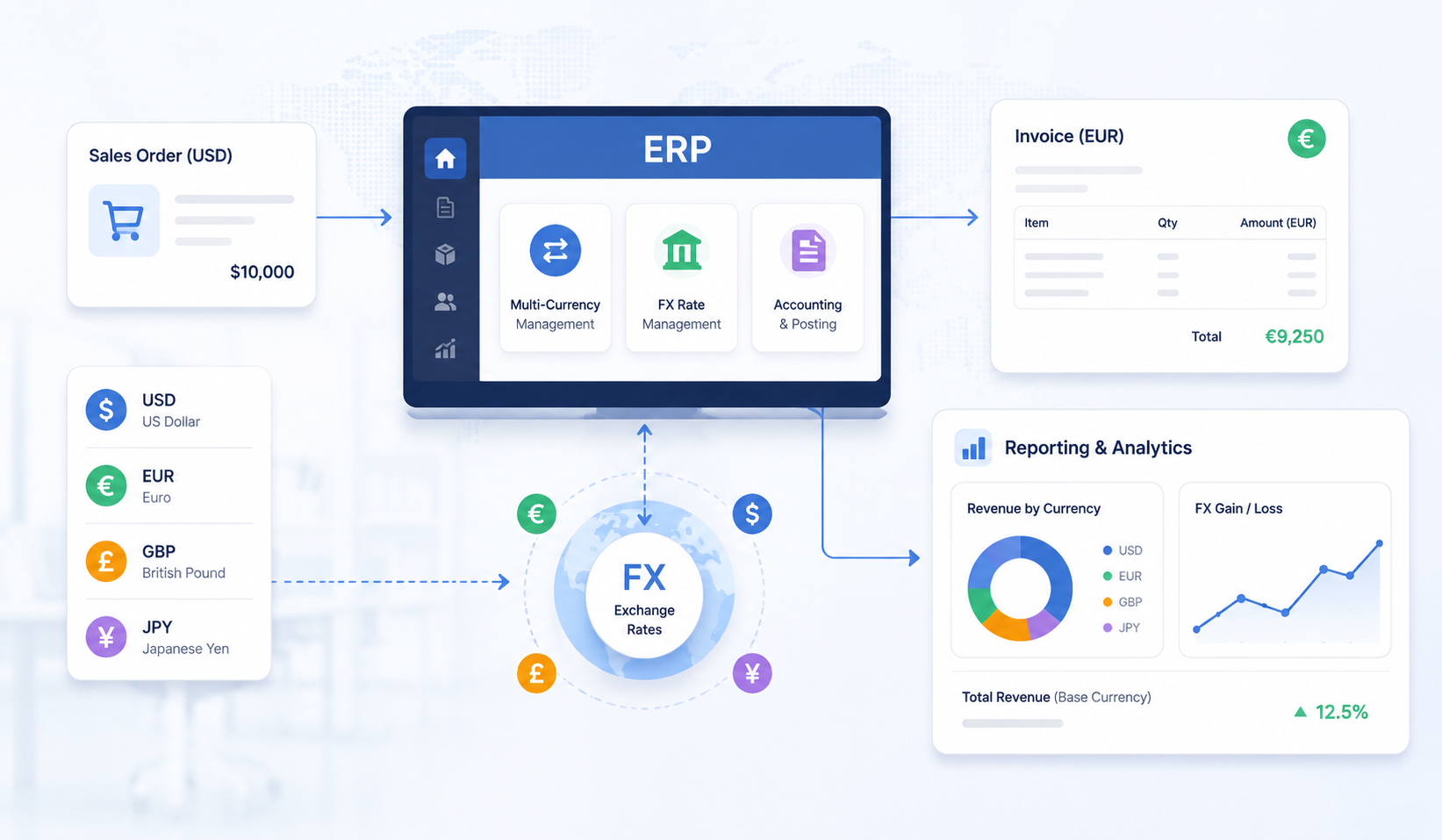
Trading in INR, USD, and EUR on one platform requires more than a currency dropdown — you need entity books, rate tables, and consolidation. Infuro’s multi-currency ERP handles this natively for exporters and multi-entity groups.
Entity currency vs reporting currency
Each legal entity transacts in its operating currency. The holding company picks a consolidation currency; Infuro translates balances using configured rate sources (average or closing by account type) so controllers see entity and group views without rebuilding translation schedules in Excel.
FX gains and losses
On settlement, realised gains or losses hit the ledger from invoice and payment currencies. At period end, unrealised balances revalue to the reporting currency. Both post with an audit trail — not a sidecar workbook that breaks every close.
India GST plus global entities
Indian entities keep GST e-invoicing while foreign entities run VAT or sales tax rules on the same platform via the finance module and multi-organization ERP layer.
Bank accounts and cash
Reconcile statements in account currency and see FX impact on entity and group cash reports. Import suppliers can invoice in USD while you sell in INR and report to a Singapore or Dubai parent in SGD or AED.
Who needs multi-currency ERP
Importers and exporters, groups with Gulf or ASEAN subsidiaries, and distributors invoicing customers in more than one currency. If FX still lives in a month-end spreadsheet, this page is your next step.