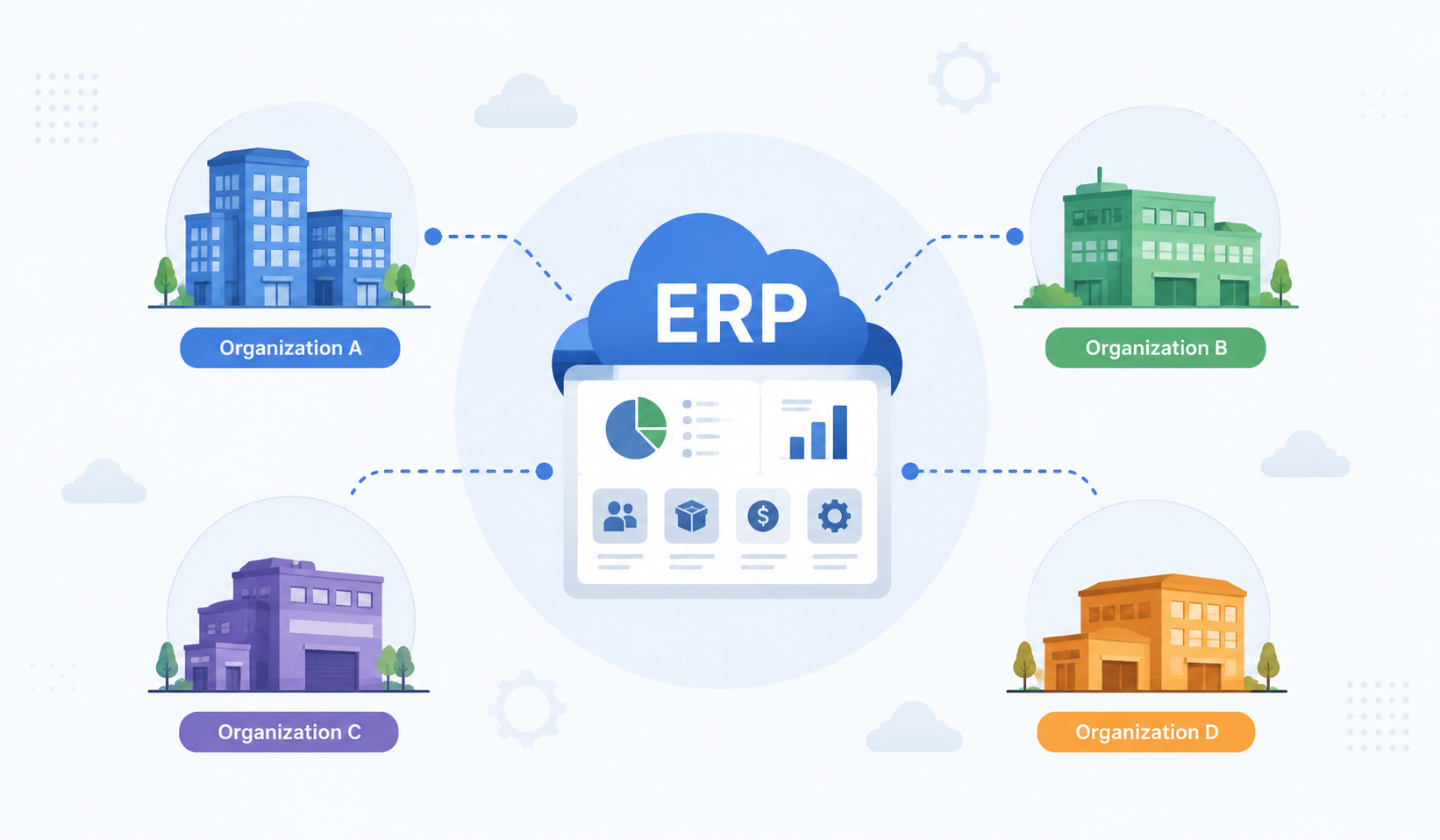
Multi-organization ERP is cloud ERP that manages multiple legal entities — subsidiaries, branches, or operating companies — on one platform with isolated books and group-level consolidation. Buyers also search multi-entity ERP and multi-company ERP for the same problem. See our multi-organization ERP guide for the full capability map.
Definition
Each entity keeps its own chart of accounts, users, and tax rules. Shared or federated masters (items, parties) reduce duplicate data entry while finance maintains entity boundaries for audit. Inter-company stock transfers and invoices post due-to/due-from automatically so month-end is not a spreadsheet pack.
Multi-entity and multi-company: the same buyer brief
RFPs often say multi-entity accounting or multi-company ERP. Functionally that means separate companies, mapped COA, intercompany automation, multi-currency where needed, and consolidated financials. Infuro’s multi-organization layer is built for that brief — not just cost centres inside one company.
When you need it
You outgrow single-company ERP when you add export subsidiaries, acquire regional distributors, open a second GSTIN or foreign entity, or run inter-company stock transfers and invoices every month. Typical inflection points: three or more warehouses, multi-currency trade, or field fleets that need POD and commissions on the same books.
How Infuro differs from multi-tenant
Multi-tenant is platform architecture for partners and white-label deployments. Multi-organization is how operating companies run day-to-day — books, FX, and consolidation. Groups often need both. Compare multi-tenant ERP with multi-org in our comparison article.
What to evaluate on a shortlist
Ask vendors how intercompany posts, how FX revaluation hits the ledger, whether India GST entities and foreign VAT entities can coexist, and whether delivery routes and commissions share the same invoice truth. Infuro ties those threads on one data model with agents and connectors.